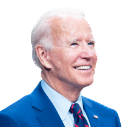
Biden closes his presidential debate by focusing on economic gains
Analyzing the article


Our Analysis: 2 Fallacies
We've made significant progress from the debacle that was left by President Trump in his - in his last term.
We find ourselves in a situation where, number one, we have to make sure that we have a fair tax system...
The fact is that I said, nobody even making under $400,000 had a single penny increasing their taxes and it will not. And if I'm reelected, that'll be the case again.
Biden argues that he has made progress on issues such as tax fairness, drug prices, and infrastructure, citing specific examples like reducing insulin costs and increasing the child tax credit. However, some of his arguments, such as suggesting that Trump's pandemic response directly caused increased inflation and taxes, rely on false cause fallacies that oversimplify complex economic factors.
While Biden's claims about progress in healthcare costs and tax reforms are grounded in real policy initiatives, the assertion of universally fair outcomes overlooks the complexities and varied impacts of these policies across different segments of the population.
1. post hoc ergo propter hoc • Biden implies that Trump's handling of the pandemic directly caused increased inflation and taxes, without considering other potential factors that may have contributed to these economic issues.
But this guy is - has increased your taxes because of the deficit. Number one, he's increased inflation because of the debacle he left after - when he handled the pandemic.
The meaning of post hoc ergo propter hoc is "after this, therefore because of this". It is a false cause fallacy that assumes that because one event preceded another, the first event must have caused the second, without sufficient evidence to support the causal relationship. Biden assumes that because taxes and inflation went up shortly after Trump was in office, therefore they went up because he had been in office.
Several factors could have contributed to increases in inflation and taxes, apart from Trump's actions or inactions:
- Economic stimulus measures: Government spending and stimulus packages, such as those implemented during the COVID-19 pandemic, can increase the money supply and lead to inflation if not carefully managed.
- Supply chain disruptions: The pandemic caused significant disruptions to global supply chains, leading to shortages and price increases for various goods and materials, which can contribute to inflation.
- Monetary policy: Decisions made by the Federal Reserve, such as setting interest rates or engaging in quantitative easing, can impact inflation rates.
- Global economic conditions: Economic instability, trade disputes, or changes in the global market can affect domestic inflation and tax rates.
- Legislative decisions: Congress, rather than the President, is responsible for passing tax legislation and budget measures that can directly impact tax rates.
2. equivocation • Biden's use of the word "tax" in the following comment is misleading and could be considered a form of equivocation, which is a fallacy that exploits the ambiguity of language by using a word in a different sense than what was previously established.
And he finds himself in a position where he now wants to tax you more by putting a 10 percent tariff on everything comes into the United States America.
Biden is speaking as if any tariff can be referred to as a way of "taxing you." While tariffs and taxes both result in higher costs for consumers, they are distinct economic measures with different purposes and implications:
- Taxes are typically levied by governments on their citizens and domestic businesses to raise revenue for public services, infrastructure, and other government functions.
- Tariffs, on the other hand, are taxes imposed on imported goods to protect domestic industries, influence trade policy, or generate revenue.
By conflating tariffs and consumer taxes, Biden suggests that Trump's proposed tariffs would directly increase the tax burden on American citizens, which is an oversimplification of the complex effects of tariffs on the economy and consumer prices.
Furthermore, the statement "a 10 percent tariff on everything" is an exaggeration, as it is unlikely that any administration would propose such a broad and all-encompassing tariff policy, even Trump's.
In summary, while Biden's use of the word "tax" in this context is not entirely inaccurate, it is a misleading oversimplification that fails to capture the nuances of tariffs and their effects on the economy.
References
- Joe Biden (2024, Jun 27). Biden's Closing Statement: Presidential Debate of June 27th, 2024.
https://edition.cnn.com/2024/06/27/politics/read-biden-trump-debate-rush-transcript/index.html
Disclaimer
Note that there being one or more apparent fallacies in the arguments presented in this article does not mean that every argument the arguer made was fallacious, nor does it mean there are not other arguments in existence for the same or similar position that are logically valid. Also note that checking for fallacies is not the same as verification of the premises the arguer starts from, such as facts that the arguer asserts or principles that the arguer assumes as the foundation for constructing arguments. For more about this, see our 'What is Fallacy Checking?'
NO AI TRAINING
Without in any way limiting the author’s [and publisher’s] exclusive rights under copyright, any use of this publication to “train” generative artificial intelligence (AI) technologies to generate text is expressly prohibited. The author reserves all rights to license uses of this work for generative AI training and development of machine learning language models.
Comments